
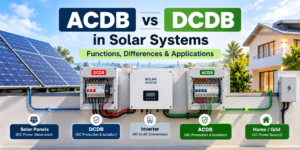
ACDB vs DCDB in Solar: Functions, Differences & Applications
Solar power systems use both DC and AC electricity. Solar panels generate DC electricity. The inverter then converts this DC electricity into AC electricity.
For this reason, solar installations need protection on both sides of the inverter. Two important components are the DCDB and ACDB.
DCDB stands for Direct Current Distribution Box. ACDB stands for Alternating Current Distribution Box.
Although both provide electrical protection, they work on different sides of a solar system. In this guide, we explain the ACDB vs DCDB difference, their functions, components, applications and importance in solar installations.
What Is DCDB in a Solar System?
DCDB stands for Direct Current Distribution Box.
Solar panels generate electricity in DC form. The DCDB works on the DC side of the solar system. It is usually installed between the solar panel array and the inverter.
The DCDB helps protect the DC circuit. It can also provide isolation and connection management.
A DCDB may contain different protection devices based on the system design.
Main Functions of a DCDB
A DCDB can perform several important functions:
- Protect the DC side of the solar system
- Provide DC circuit isolation
- Support surge protection
- Protect connected equipment from certain electrical faults
- Organize DC connections
- Make maintenance and servicing easier
In simple terms, the DCDB manages and protects the electrical connection between the solar panels and the inverter.
What Is ACDB in a Solar System?
ACDB stands for Alternating Current Distribution Box.
The inverter converts the DC electricity from solar panels into AC electricity. The ACDB works on this AC side of the system.
It is generally installed after the inverter. It provides protection and isolation for the AC output.
The exact ACDB configuration depends on the solar system and electrical design.
Main Functions of an ACDB
An ACDB can perform several important functions:
- Protect the AC side of the solar system
- Provide AC circuit isolation
- Support surge protection
- Protect connected electrical equipment
- Organize AC connections
- Make maintenance and servicing easier
In simple terms, the ACDB manages and protects the AC output from the inverter.
Where Are ACDB and DCDB Used?
The easiest way to understand the ACDB vs DCDB difference is to look at their position in the solar system.
A basic solar power flow looks like this:
Solar Panels → DCDB → Inverter → ACDB → Electrical Load / Grid
First, the solar panels generate DC electricity.
Next, the DCDB provides protection and isolation on the DC side.
Then, the inverter converts DC electricity into AC electricity.
Finally, the ACDB manages protection and isolation on the AC side.
Therefore, ACDB and DCDB perform different but complementary functions.
ACDB vs DCDB: Key Differences
| Feature | DCDB | ACDB |
|---|---|---|
| Full Form | Direct Current Distribution Box | Alternating Current Distribution Box |
| Electrical Side | DC side | AC side |
| Typical Position | Between solar panels and inverter | After the inverter |
| Main Function | DC protection and isolation | AC protection and isolation |
| Current Type | Direct Current | Alternating Current |
| Common Protection | DC fuse, DC isolator, DC SPD | AC breaker, AC isolator, AC SPD |
| Connection | Solar array and inverter | Inverter and electrical system |
How Do ACDB and DCDB Work Together?
ACDB and DCDB do not perform the same job. Instead, they protect different parts of the solar installation.
The DCDB works before the inverter. It manages the DC electricity coming from the solar panels.
The inverter then converts DC electricity into AC electricity.
After that, the ACDB manages the AC side.
As a result, both components can work together to provide protection across the solar power system.
What Components Are Used in a DCDB?
The components inside a DCDB depend on the system design. They can also vary based on voltage, current and string configuration.
Common components include:
1. DC Fuse
A DC fuse helps protect the circuit from excessive current. It can help protect the solar circuit during certain fault conditions.
2. DC Isolator
A DC isolator provides a way to disconnect the DC circuit. This can make maintenance and servicing safer.
3. DC Surge Protection Device
A DC surge protection device, or DC SPD, helps protect connected equipment from transient voltage surges.
4. Enclosure
The enclosure protects the internal components. It also provides a structured space for DC connections.
What Components Are Used in an ACDB?
The ACDB configuration also depends on the project requirements.
Common components include:
1. AC Circuit Breaker
An AC circuit breaker helps protect the AC circuit from certain overcurrent and fault conditions.
2. AC Isolator
An AC isolator provides a way to disconnect the AC circuit during maintenance or servicing.
3. AC Surge Protection Device
An AC surge protection device, or AC SPD, helps protect connected equipment from transient voltage surges.
4. Enclosure
The enclosure protects the internal components. It also keeps the AC connections organized.
Why Are ACDB and DCDB Important?
Solar systems handle both DC and AC electricity. Therefore, protection on both sides of the inverter is important.
ACDB and DCDB can help with:
- Electrical isolation
- Circuit protection
- Surge protection where required
- Safer maintenance
- Better cable and connection management
- Protection of connected equipment
In addition, suitable protection equipment can improve the safety and reliability of a solar installation.
Do All Solar Systems Use the Same ACDB and DCDB?
No. The ACDB and DCDB configuration can vary from one project to another.
Several factors can affect the design:
- Solar system capacity
- Number of solar panel strings
- System voltage
- System current
- Inverter configuration
- Installation type
- Site conditions
- Applicable electrical requirements
Therefore, installers should select ACDB and DCDB components according to the actual system design.
What Should You Check Before Selecting ACDB or DCDB?
Choosing the right protection box requires careful consideration.
1. Check Voltage and Current Ratings
Always check the voltage and current requirements of the solar system. The selected equipment should match the system specifications.
2. Check Protection Requirements
Review the required protection devices before selecting an ACDB or DCDB. The requirements can vary between projects.
3. Check Component Quality
Use reliable electrical components from suitable manufacturers. Also, make sure that each component matches the system requirements.
4. Check Enclosure Quality
The enclosure should suit the installation environment. Outdoor installations may need suitable protection against dust, water and weather conditions.
5. Check Installation Requirements
Correct wiring and proper installation are important for safe operation. Always follow the project design and applicable electrical requirements.
6. Check Testing and Compliance
Check the applicable technical requirements before installation. Also, verify the ratings and specifications of the selected components.
Common ACDB and DCDB Mistakes to Avoid
1. Choosing the Wrong Rating
Do not select an ACDB or DCDB without checking voltage and current requirements.
For example, a protection device with an unsuitable rating may not provide the required protection.
2. Ignoring the Complete System Design
Do not select the protection box separately from the solar system. Consider the panels, inverter, wiring and electrical connection together.
3. Ignoring Surge Protection
Evaluate surge protection requirements during the system design. The correct protection depends on the project and site conditions.
4. Poor Wiring
Loose connections and incorrect wiring can create safety and performance problems. Always use proper installation practices.
5. Selecting Only on Price
Price should not be the only factor when choosing ACDB or DCDB equipment.
Instead, compare component quality, ratings, protection features, enclosure quality and installation requirements.
ACDB vs DCDB: Which One Is Better?
There is no single answer to which one is better. ACDB and DCDB serve different purposes.
DCDB works on the DC side of the solar system.
ACDB works on the AC side of the solar system.
Therefore, the two components should not be compared as direct alternatives.
Instead, the right ACDB and DCDB should be selected according to the solar system design and protection requirements.
Frequently Asked Questions
What is the main difference between ACDB and DCDB?
The main difference is the side of the solar system they protect.
A DCDB works on the DC side between the solar panels and inverter. An ACDB works on the AC side after the inverter.
What does DCDB stand for?
DCDB stands for Direct Current Distribution Box. It provides protection, isolation and connection management on the DC side of a solar system.
What does ACDB stand for?
ACDB stands for Alternating Current Distribution Box. It provides protection, isolation and connection management on the AC side of a solar system.
Can ACDB and DCDB be used together?
Yes. ACDB and DCDB can work together in the same solar installation.
The DCDB protects the DC side. The ACDB protects the AC side.
Is DCDB required for every solar system?
The required DC protection depends on the solar system design, inverter configuration and applicable requirements. A qualified professional should determine the correct configuration.
Is ACDB required for every solar system?
The required AC protection depends on the system design and applicable electrical requirements. A qualified professional should determine the appropriate configuration.
Where is the DCDB installed?
The DCDB is generally installed on the DC side of the solar system, between the solar panel array and inverter.
Where is the ACDB installed?
The ACDB is generally installed on the AC side after the inverter. It manages protection and isolation for the inverter’s AC output.
Conclusion
ACDB and DCDB are important protection components in many solar installations.
The DCDB manages protection and isolation on the DC side. The ACDB manages protection and isolation on the AC side.
Understanding the ACDB vs DCDB difference can help homeowners, installers and project teams understand the electrical protection used in a solar system.
Looking for reliable ACDB and DCDB solutions for your solar project?
Get in touch with Vistara Renewables to discuss your solar electrical requirements.